SCIENCE · CLASS 6 · CHAPTER 11
🌿 Nature’s Treasures
Bhoomi and Surya visit Ajji near the Western Ghats. They discover how air, water, sunlight, forests, soil, rocks and fuels support everyday life—and why we must care for them.
A resource can renew naturally and still become scarce or polluted if we waste it.
Air: an invisible treasure
Textbook pages 207–210
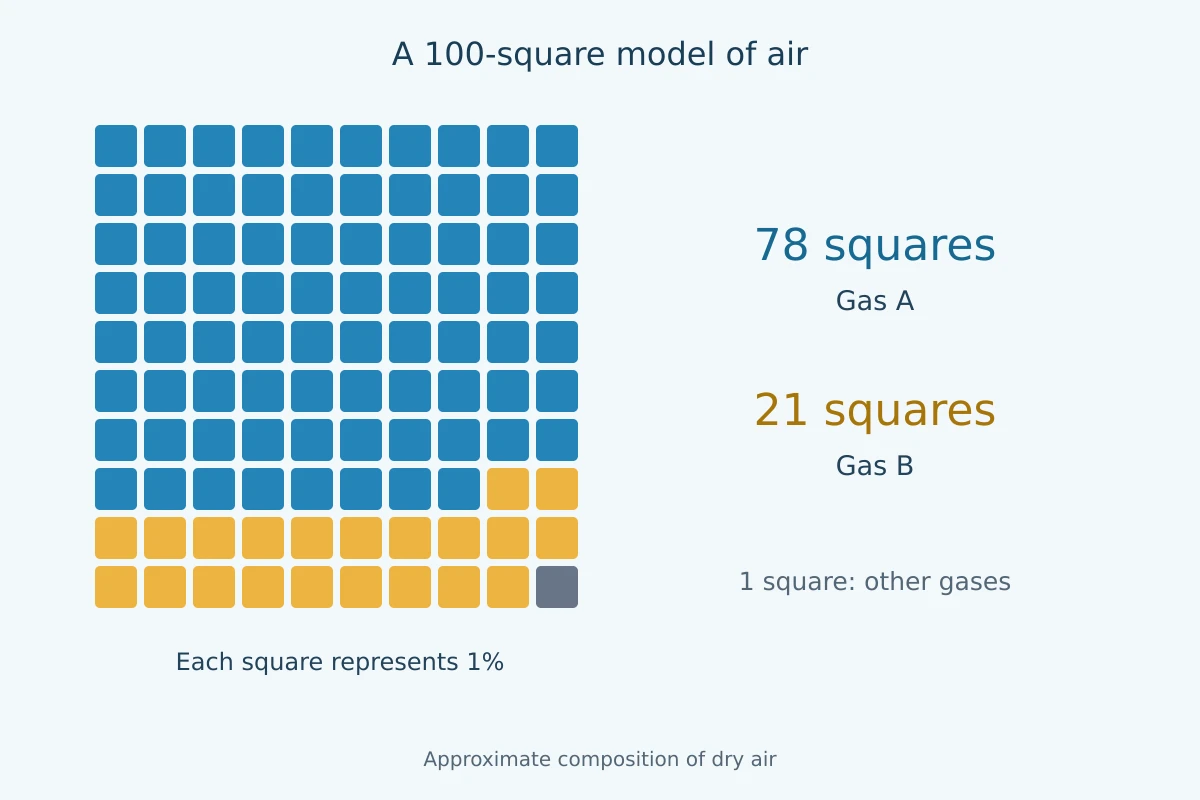
Ajji reminds Bhoomi and Surya that living things depend on nature. We cannot see clean air, but we breathe it. Air is a mixture of gases: about 78% nitrogen, 21% oxygen and 1% argon, carbon dioxide and other gases. In a model of 100 equal squares, colour 78, 21 and 1 square to see what a percentage means. Oxygen is needed by our body; plants and many other organisms also use oxygen for respiration.
Breathe in and out normally, then take a comfortable deep breath and breathe out slowly. The book also asks how long you can hold a breath and how you feel. Do not compete or hold your breath until uncomfortable. Record your own observation. Breath holding soon feels difficult because the body needs a continuing supply of oxygen.
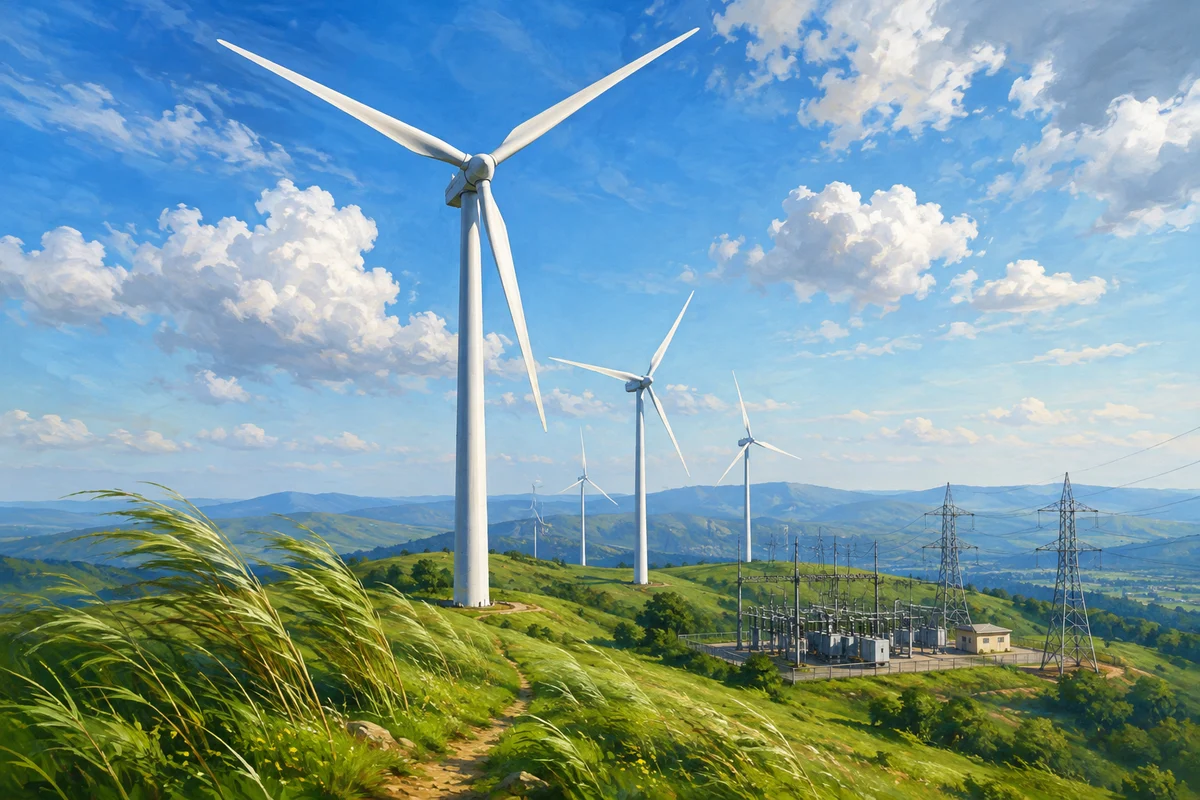
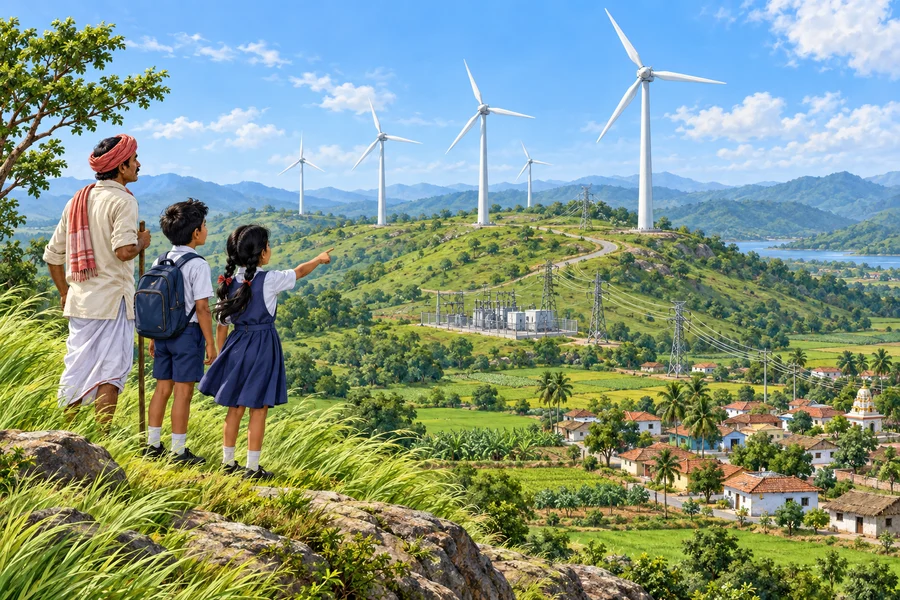
Air in motion is wind: a gentle breeze can move leaves or a fast storm can move much more. Air makes clothes sway, book pages flutter and a paper firki spin. Wind can turn a windmill to pump water, mill flour or generate electricity.
With an adult helping with scissors and the pin, use a 15 cm × 15 cm square paper, fold and cut as shown in textbook Fig. 11.2, attach the blades loosely to a soft stick, then blow gently or move it back and forth. Record when it turns. The moving air pushes its blades; a wind turbine uses the same broad idea. Find Muppandal (Tamil Nadu), Jaisalmer (Rajasthan) and Brahmanvel (Maharashtra) on a map as textbook examples.

Water: use every drop carefully
Textbook pages 211–213
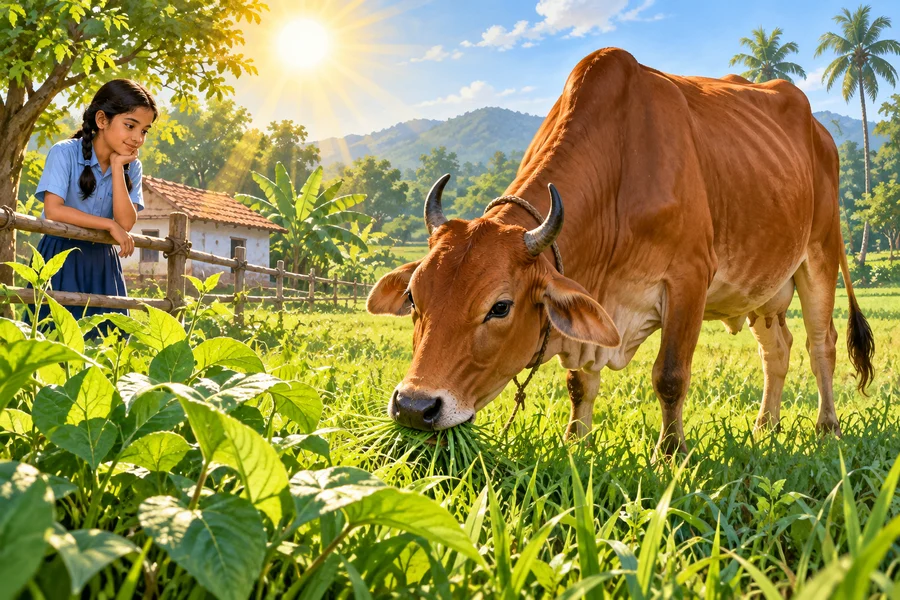
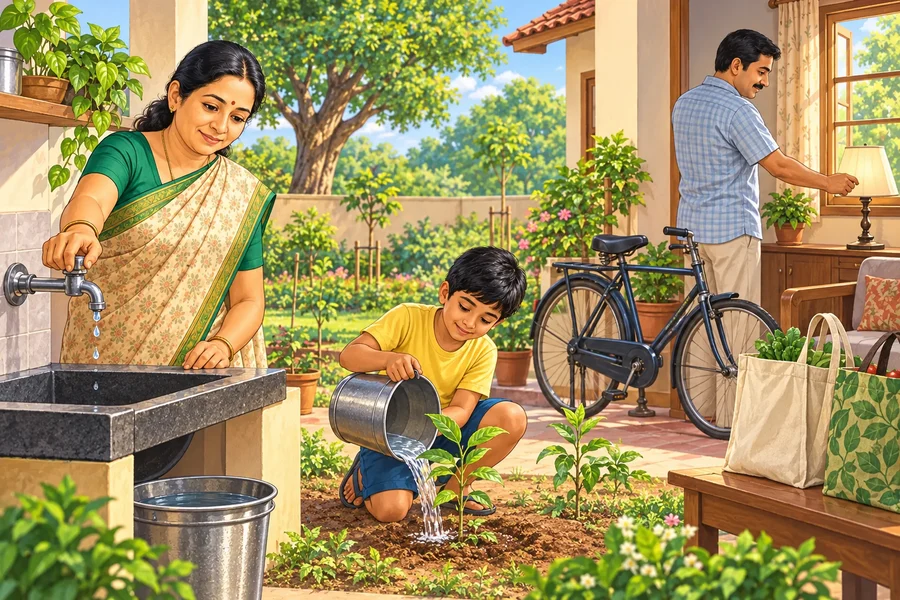
Ajji waters vegetables and fills troughs for cows. We use water for drinking, cooking, bathing, washing, cleaning, farming and industry. About two-thirds of Earth’s surface is covered by water, but most is salty ocean water. Freshwater occurs in ice and snow, lakes and rivers, and underground. Only a small share is readily accessible, and not all accessible water is safe to drink.
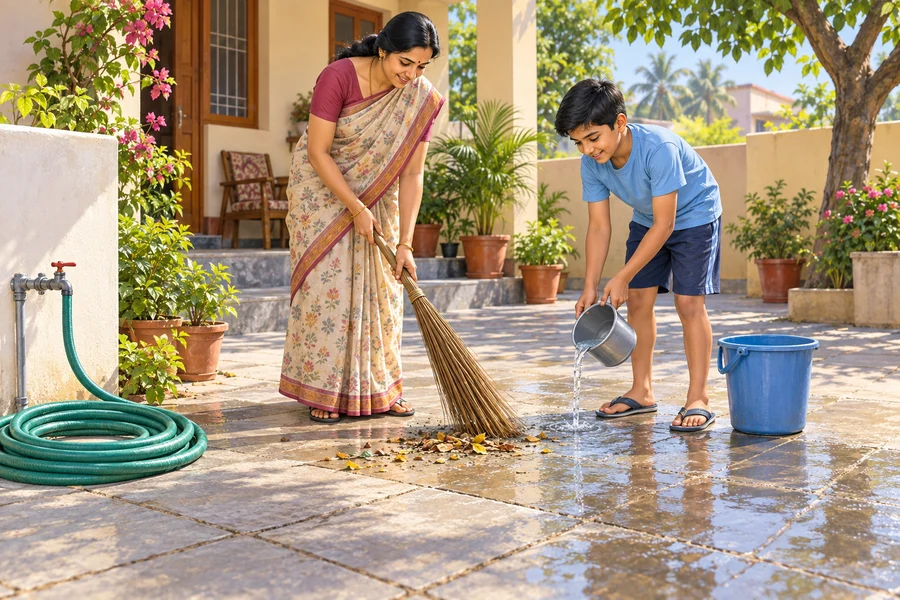
Make three columns: activity · where water is wasted · how to reduce waste. Examine all seven textbook rows: hand washing, washing clothes, washing utensils, taking a shower, cooking, gardening and brushing teeth. Example: “Brushing teeth · tap left running · turn it off while brushing.” For gardening, water near roots at a suitable time; for laundry, wash sensible loads. Record your own household observations rather than copying every model answer.
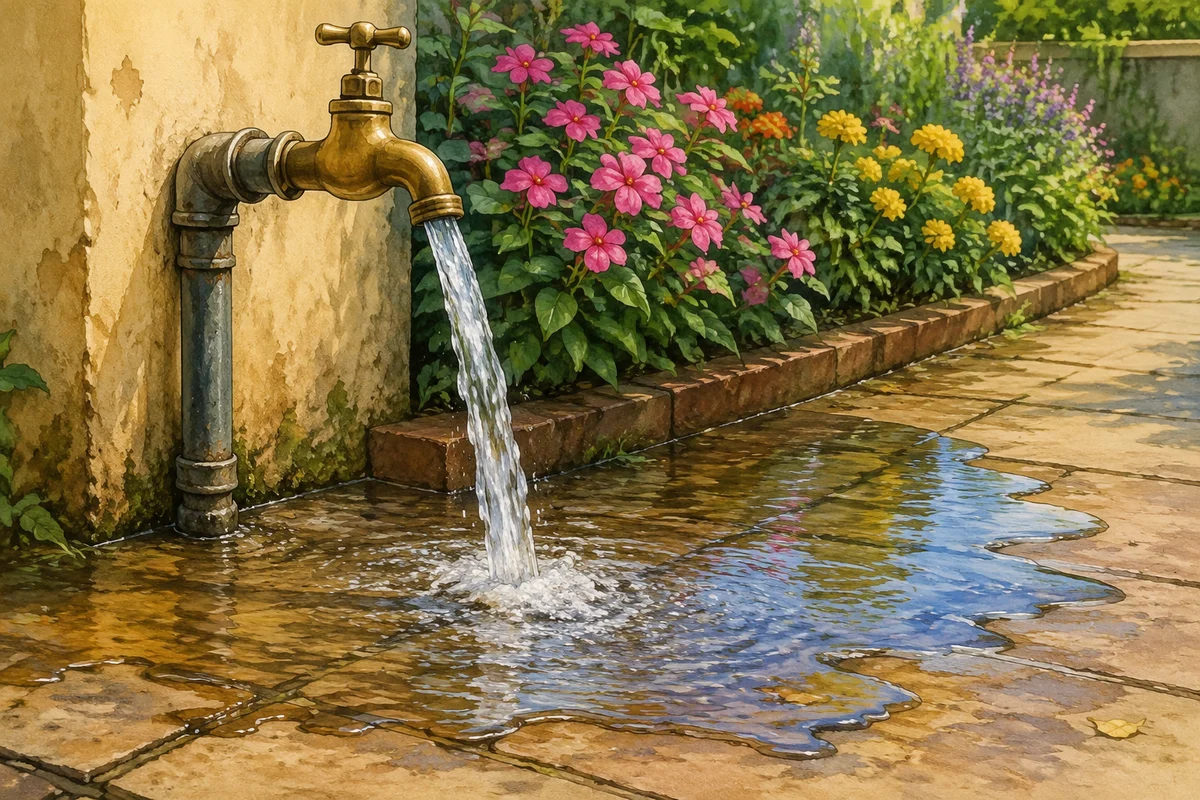
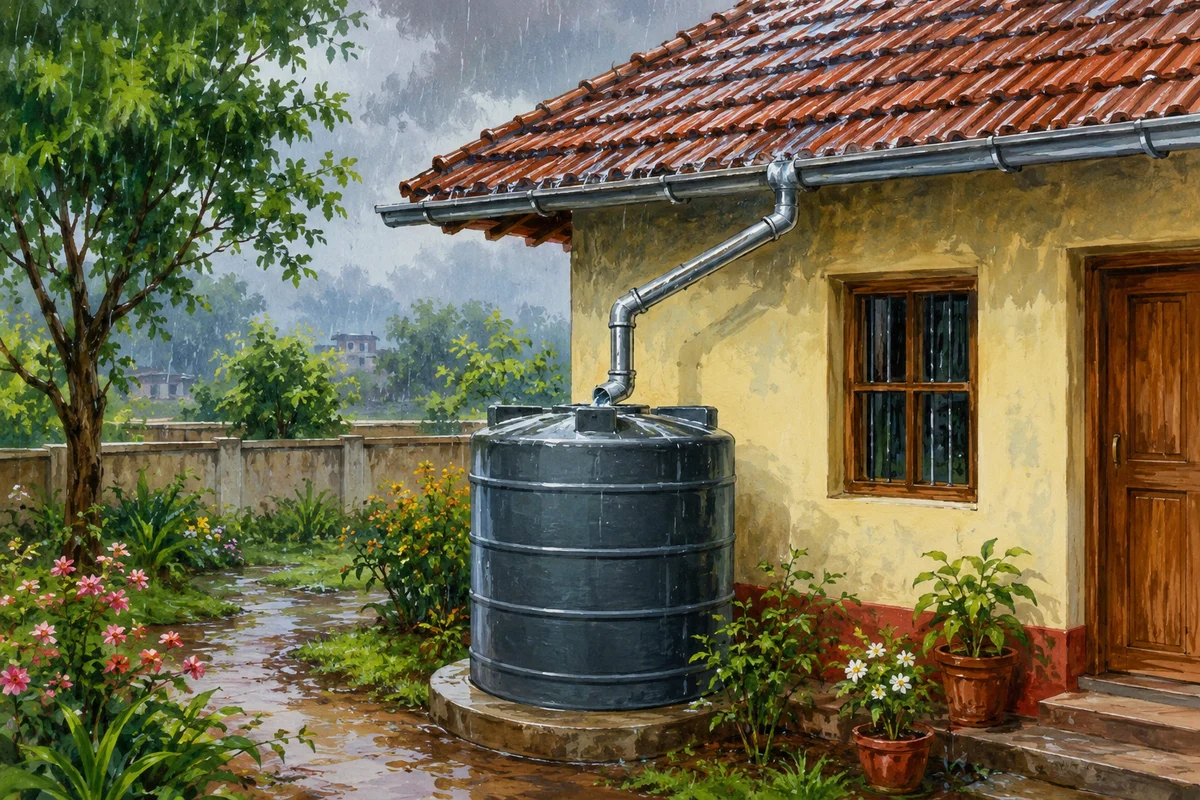
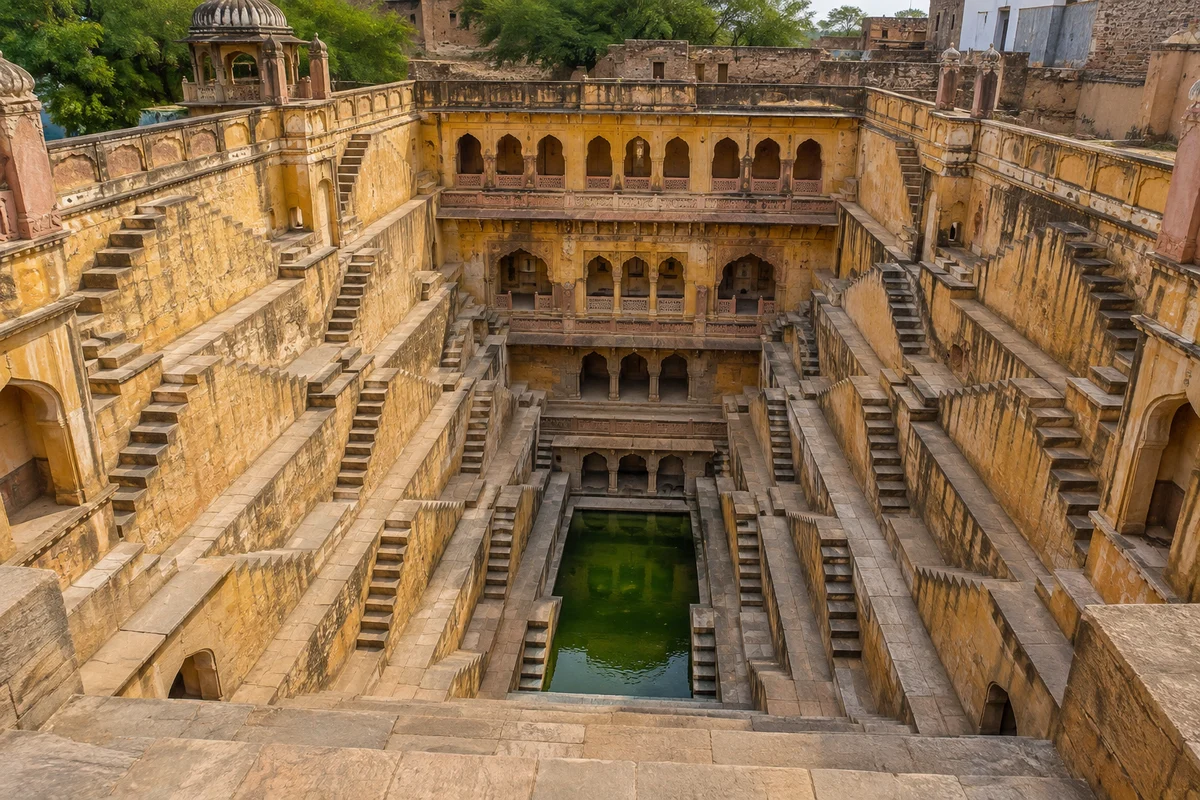
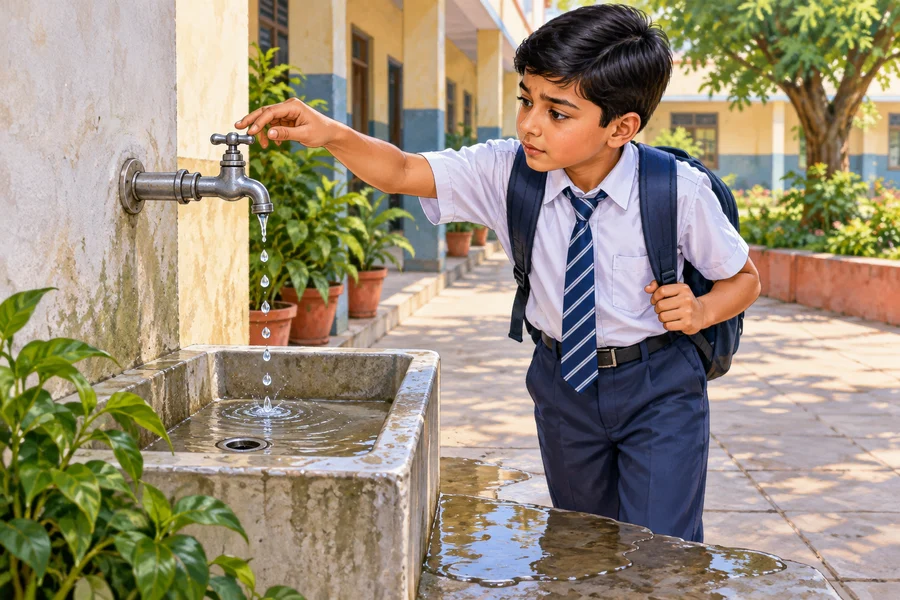
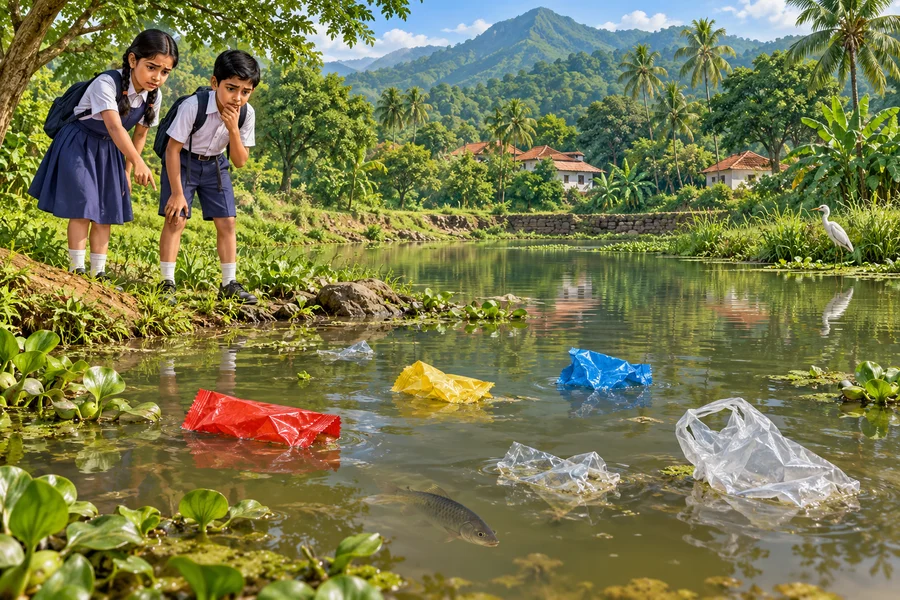
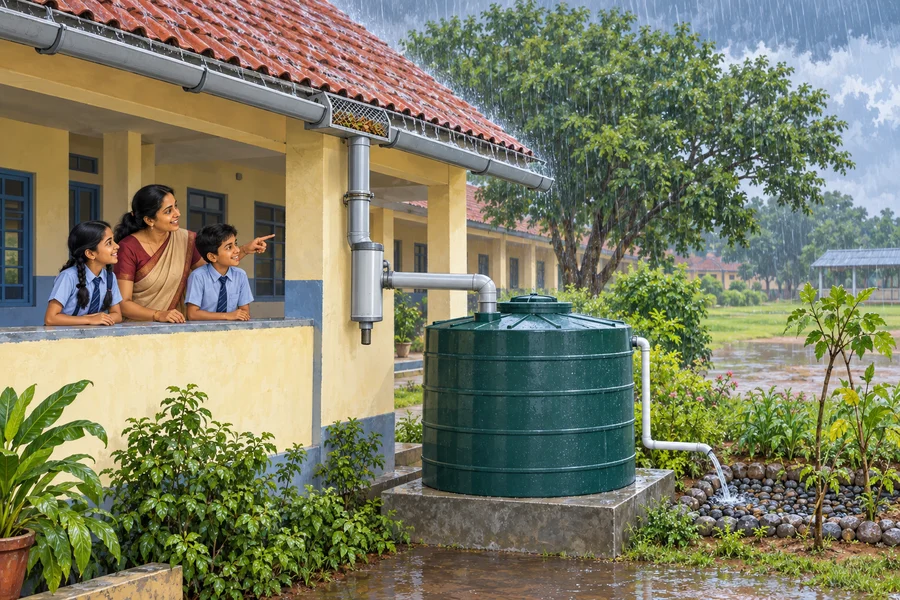
Fix leaking taps and do not throw wrappers, sewage or industrial waste into rivers and lakes. Polluted water is unsafe for living things. Access to clean water differs between communities; some people walk far to fetch it. Rainwater harvesting collects and stores rain for suitable later uses. Stepwells called bawadi in Rajasthan and vav in Gujarat can receive rainfall and seepage from nearby sources. World Water Day is observed on 22 March.
The Sun supplies light, heat and energy
Textbook pages 214–216
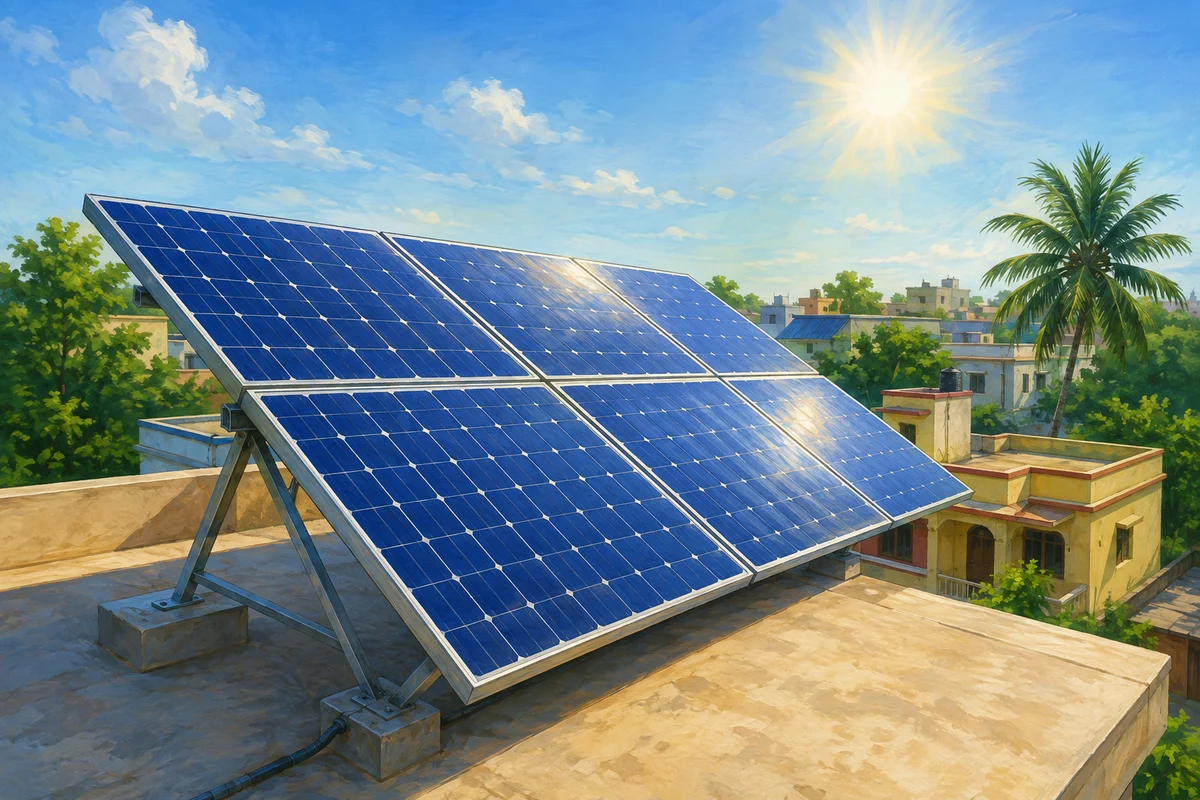
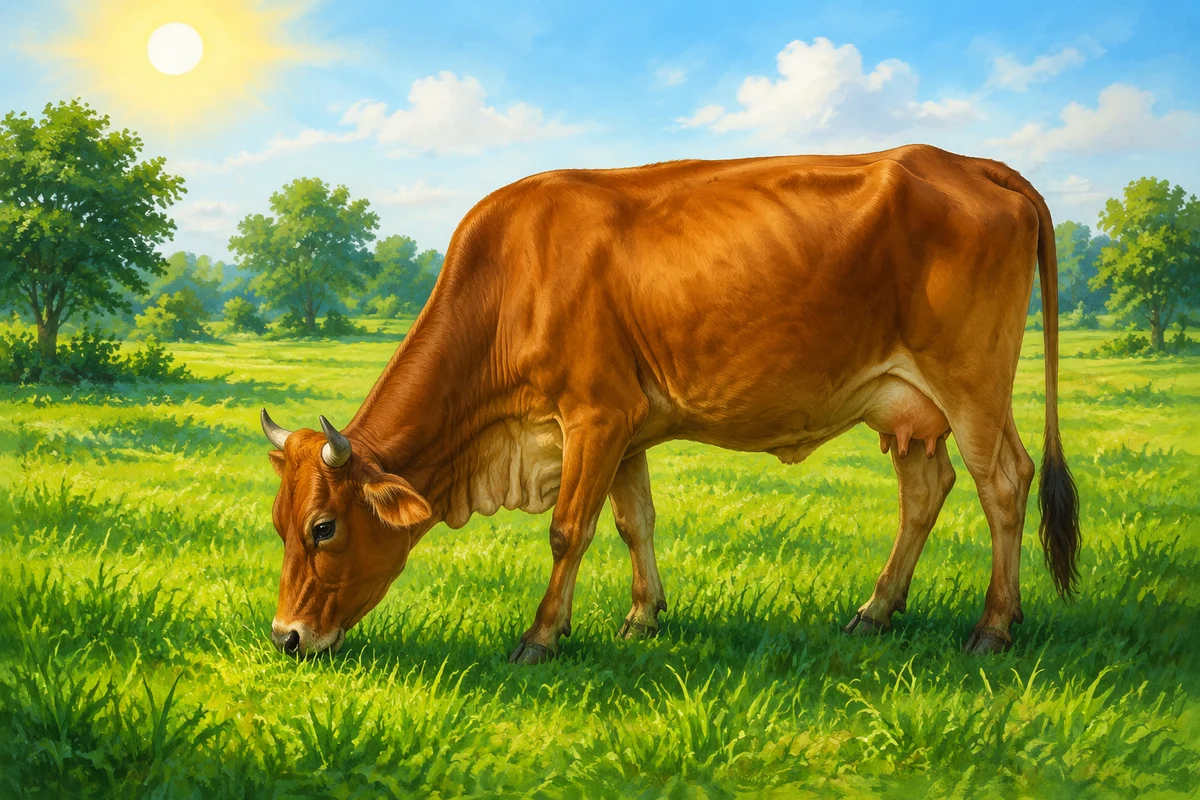
Ajji dries chillies in sunlight; sunlight can also dry clothes, warm water and help evaporate water in the water cycle. Plants use sunlight to make food. A cow gets energy from grass, and the grass depended on sunlight: Sun → grass → cow. Standing in sunshine is not how the cow obtains its food energy. Some families offer water to the morning Sun as an expression of gratitude. A rooftop solar panel converts sunlight to electricity; a solar cooker concentrates or traps solar heat for cooking, and a solar water heater warms water.
What if the Sun is hidden for a few days? It may be darker and cooler; drying takes longer and solar devices produce less energy. Clouds do not make the Sun disappear. Draw two uses of sunlight, label the heat or light involved, and compare your drawings with a friend.
Forests support many kinds of life
Textbook pages 216–218
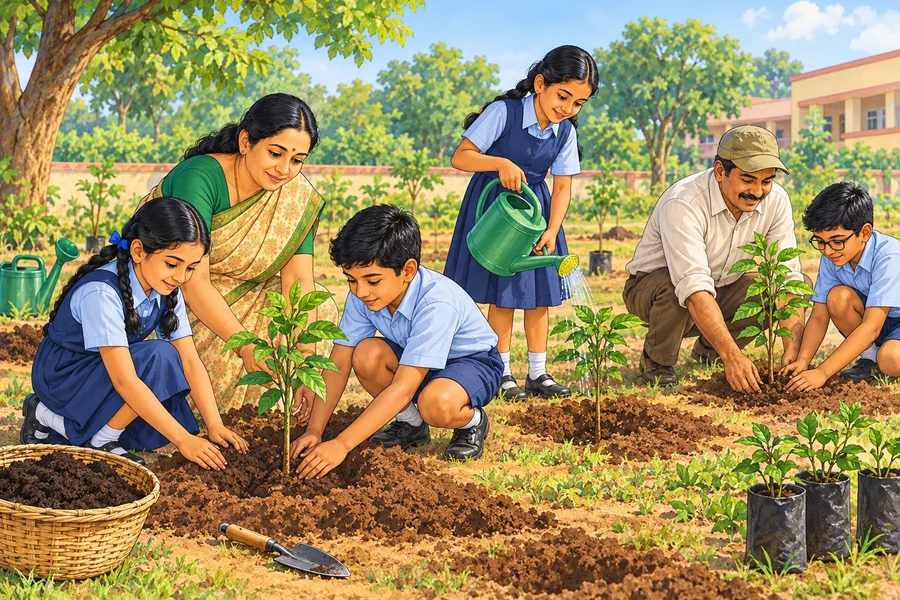
Ajji shows herbs, shrubs and trees, as well as food and shelter for birds, insects and other animals. Bhoomi and Surya collect only fallen nellikai (Indian gooseberries), leaving fruit for wildlife and seeds for new plants. List five things forests can provide, such as fruits, medicines, timber, fibres and honey; collect or use them responsibly.
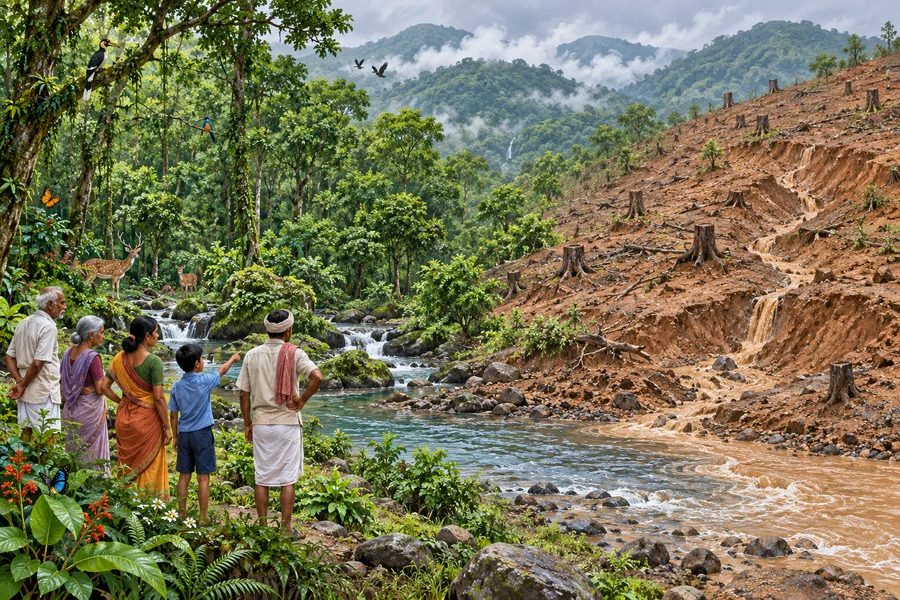
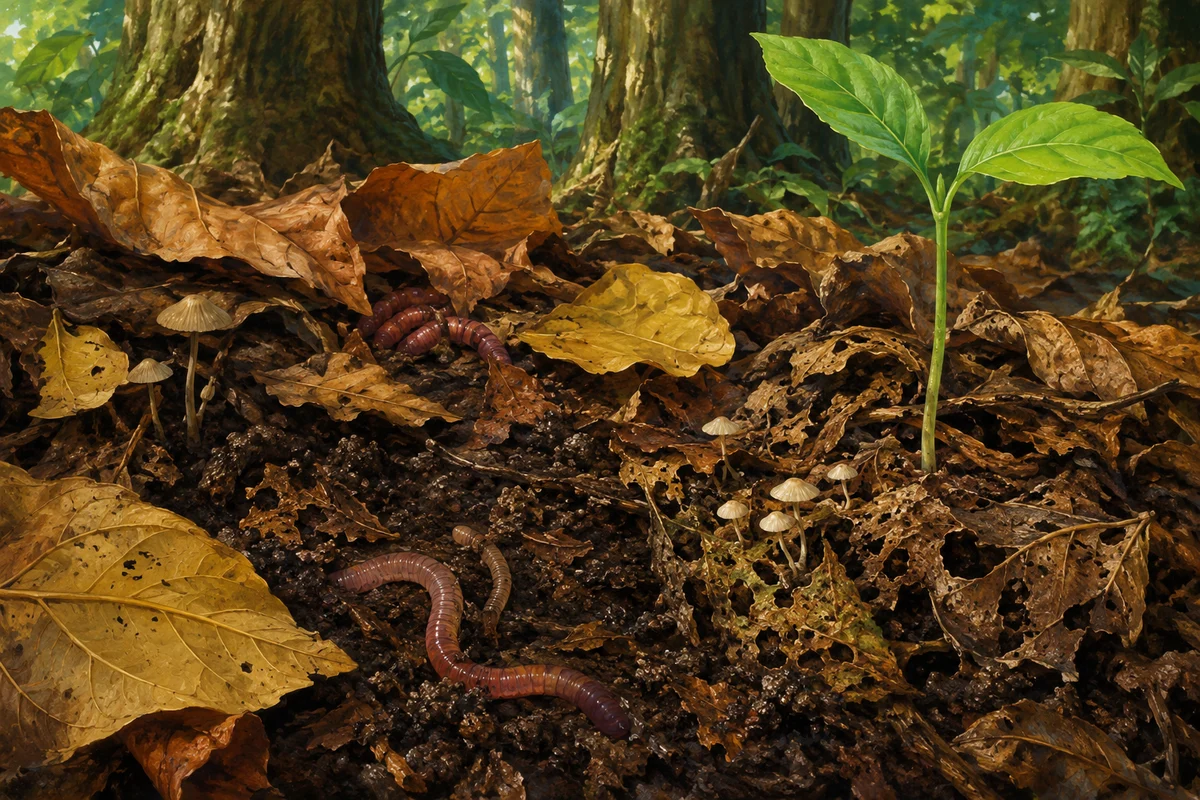
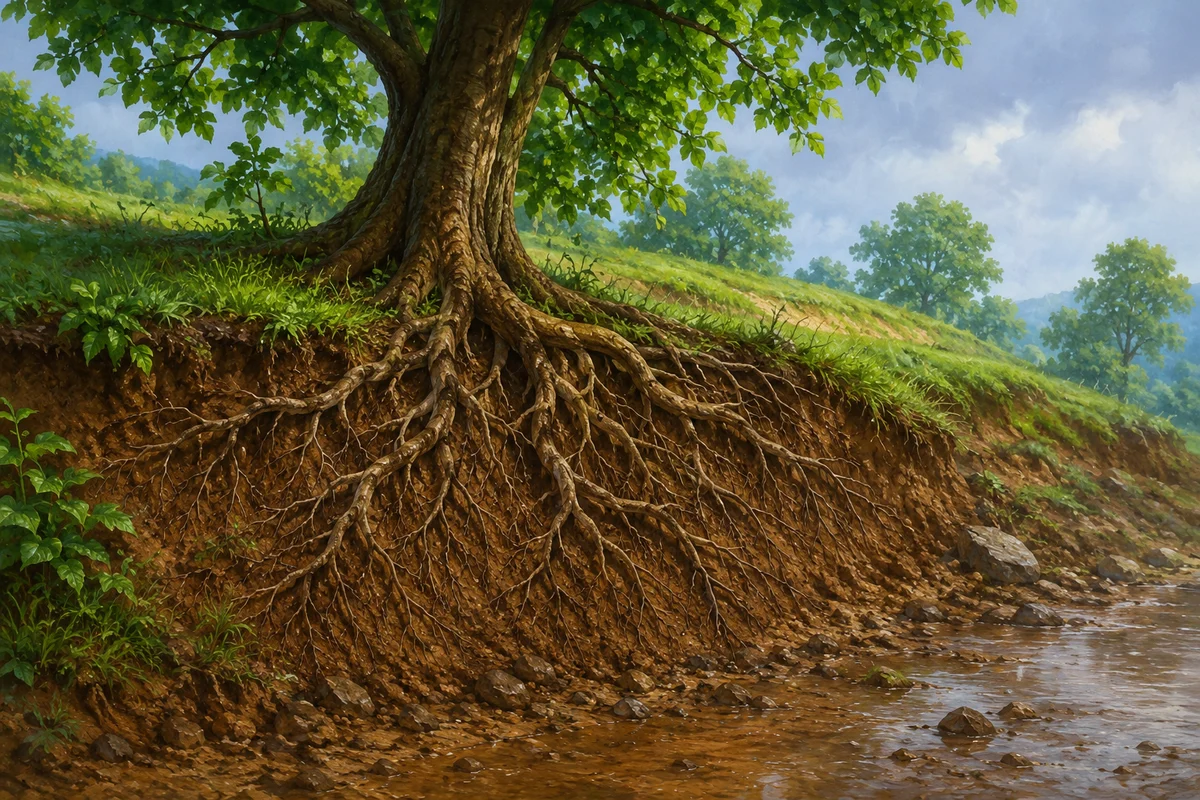
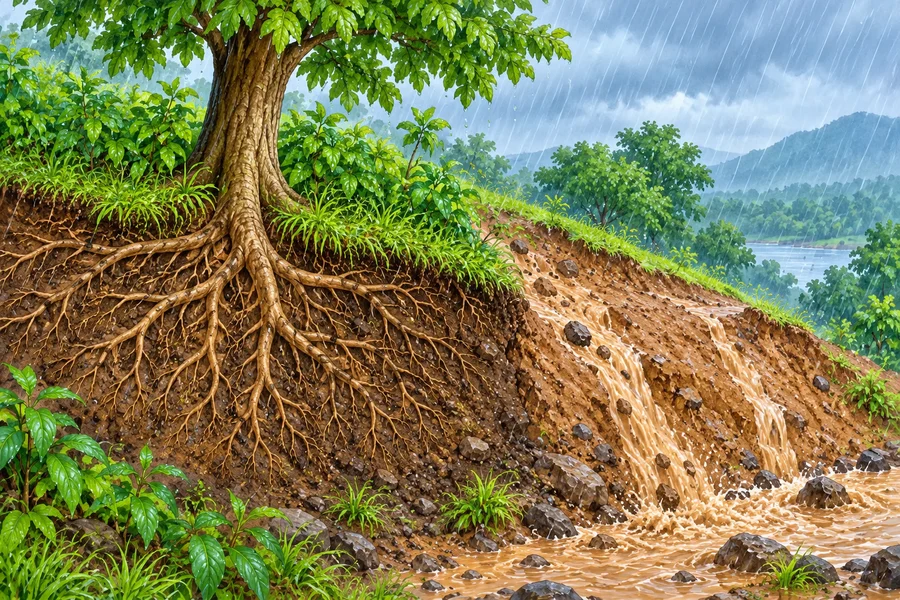
Cutting a large forest removes habitats and takes a long time to repair. Tree roots hold soil and fallen leaves decay into nutrients—nature recycles. Van Mahotsav is observed in July to encourage planting and respect for trees. The textbook recalls sacred groves—community-protected forest patches—and the Chipko movement, which began in the early 1970s in the Uttarakhand region; local women were prominent among people who protected trees by embracing them. Make a short story, poem, presentation or role play about the effects of large-scale cutting.
Soil, rocks and minerals
Textbook pages 218–221
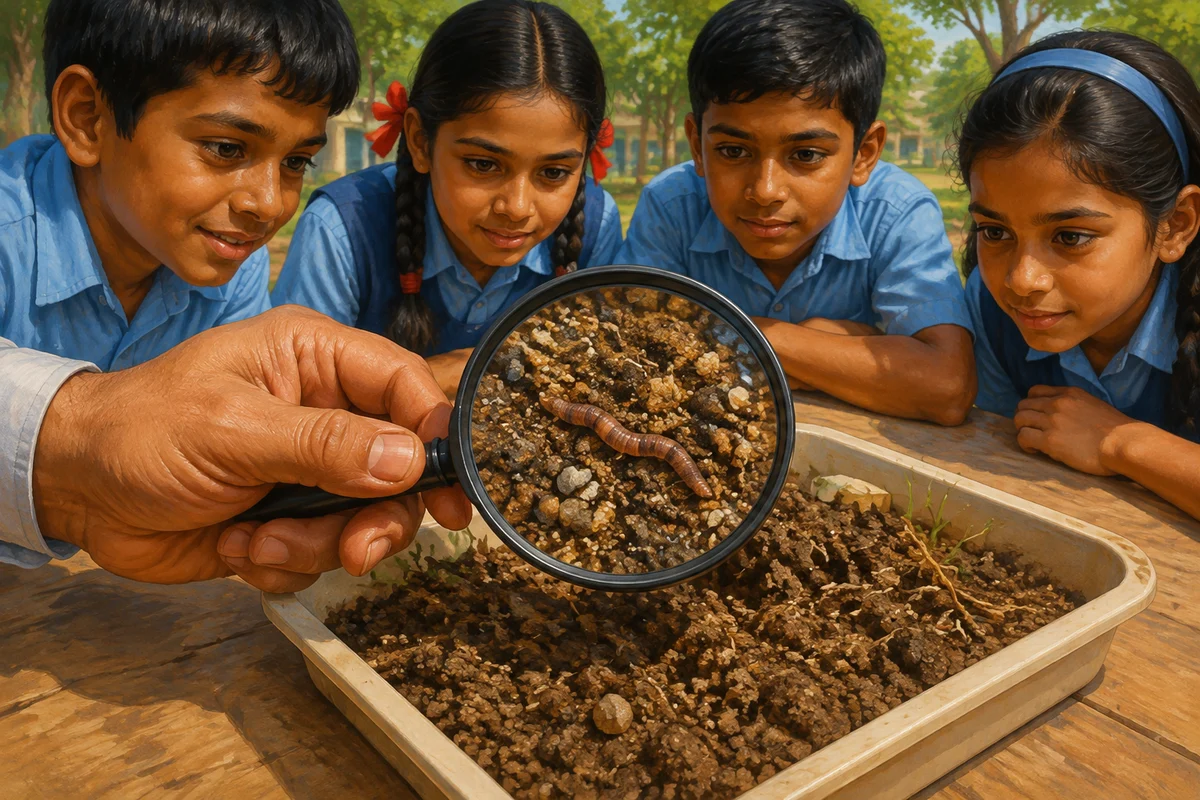
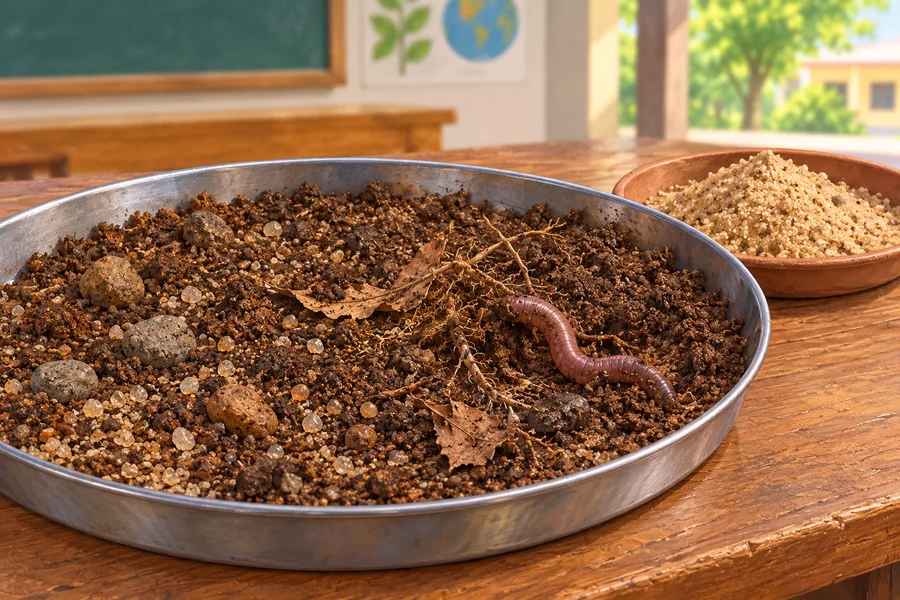
Ajji loosens garden soil so air and roots can move through spaces between particles. Earthworms also help loosen it. Soil contains particles, organic remains and organisms; rocks break down over long periods through sunlight, water and living things. Different soils differ in colour, texture and usefulness. Wash hands after touching soil, and avoid samples contaminated with rubbish.
With an adult, collect small samples from safe places. For each, write location · guess · colour/texture seen with your eyes · extra details seen with a magnifier, as in Table 11.2. Compare guesses with observations and compare sites. A lens may show tiny grains and plant pieces, but it does not reveal every microorganism.
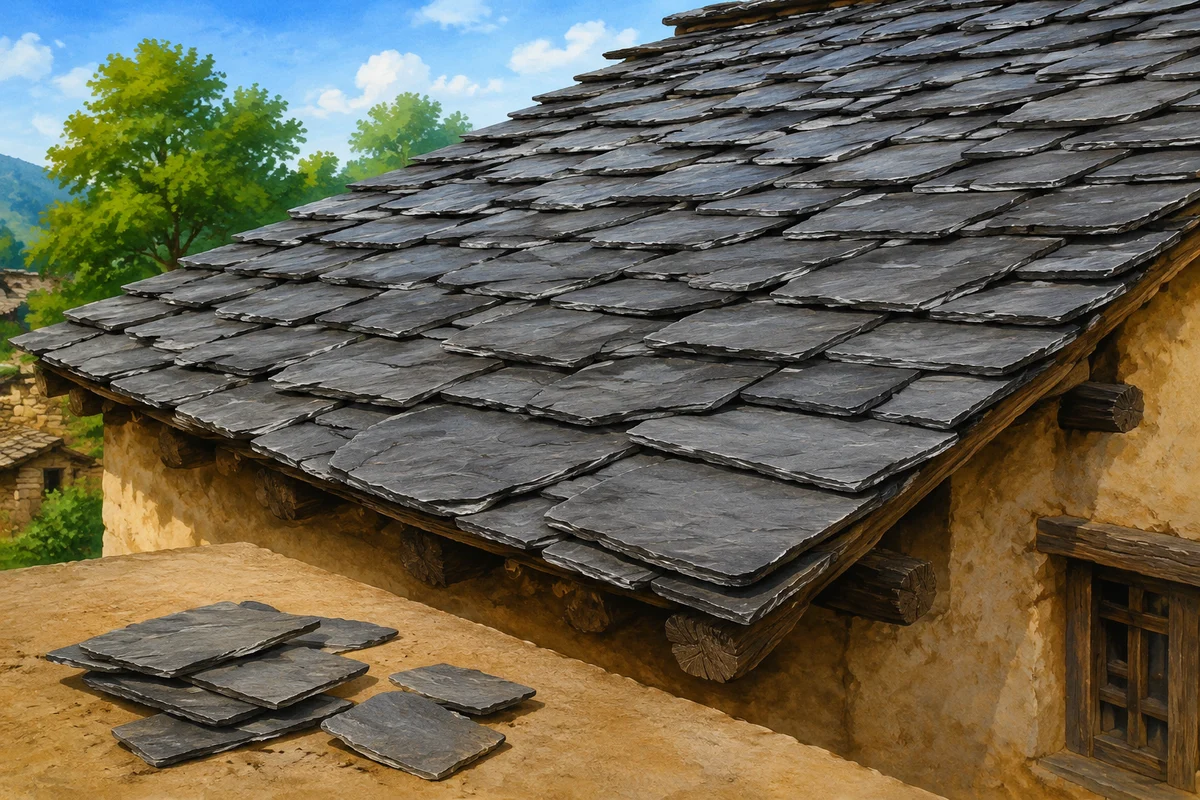
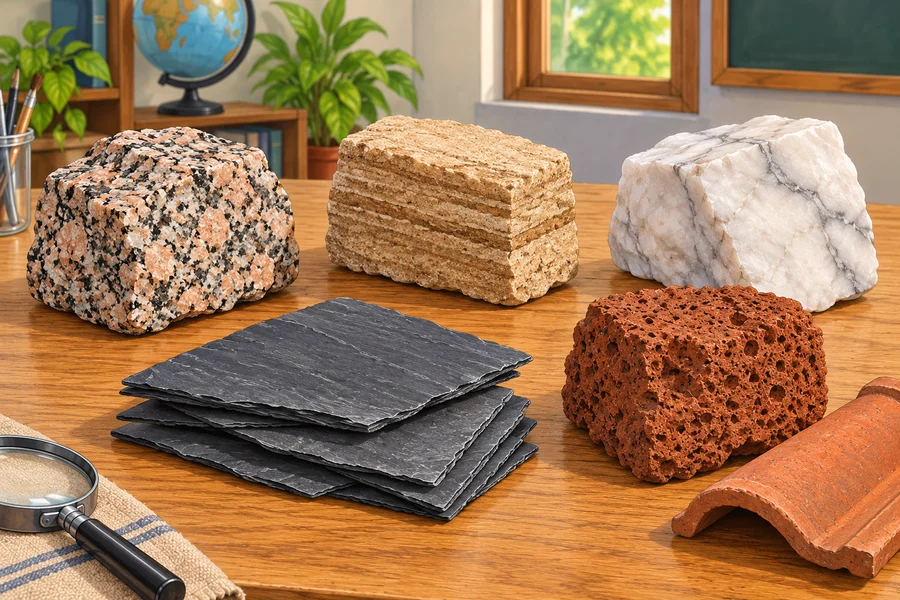
Rocks are used in roads and buildings: slate may cover roofs; laterite can be used as building blocks. Granite, sandstone and marble are other examples; early people made hand axes and arrowheads from stone. Rocks contain minerals, and useful metals such as iron, copper, aluminium and gold come from mineral sources. Modern phones and machines also use minerals. Minerals and rocks form over very long times, so use materials responsibly.
Fossil fuels take millions of years to form
Textbook pages 221–223
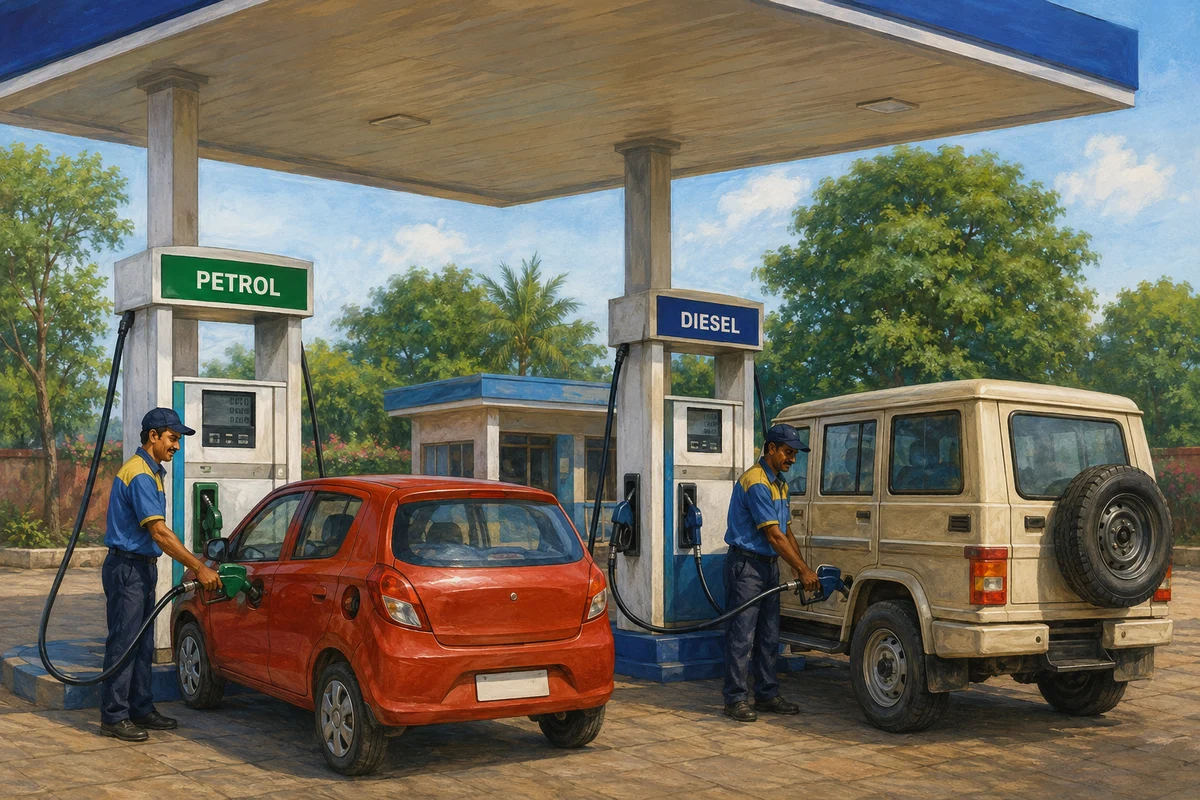
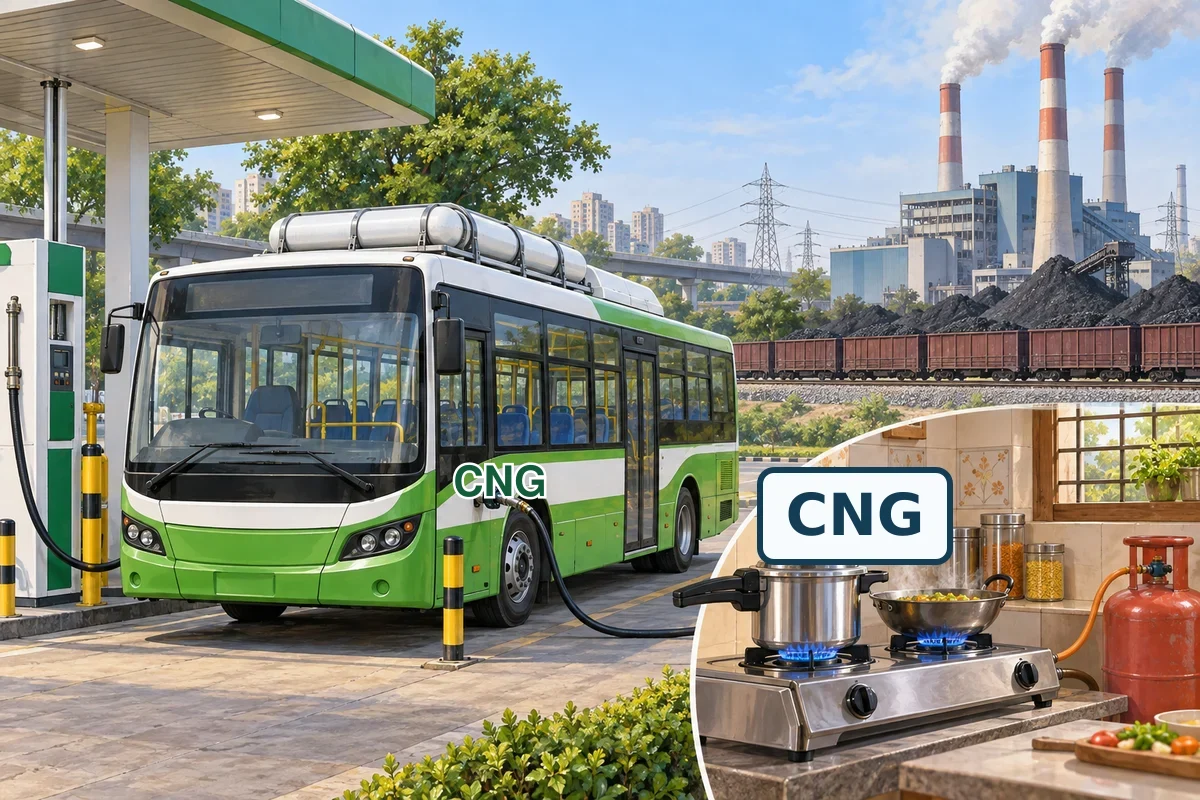
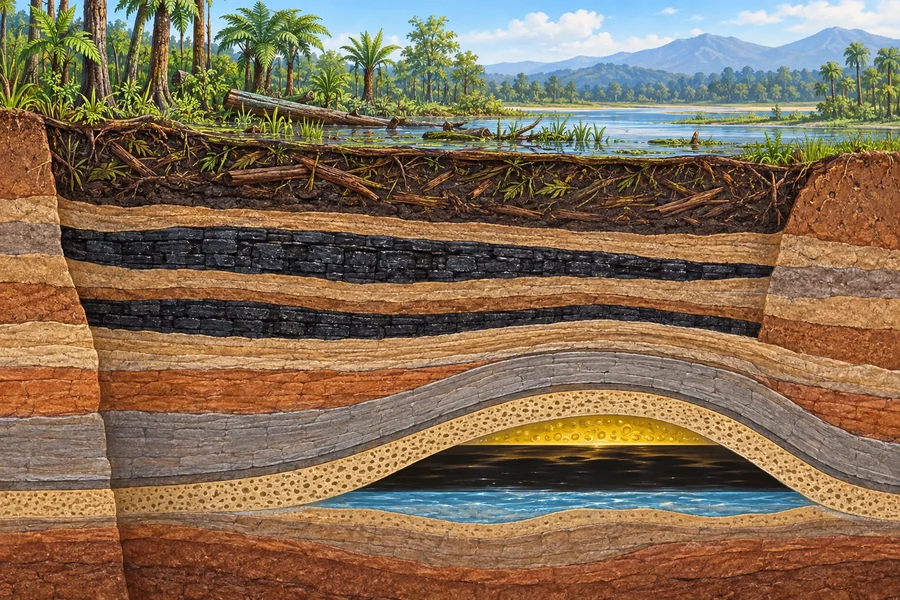
Observe vehicles safely with an adult; do not go into the road. Record vehicle type · fuel used only when known from a label, driver or reliable information. Petrol and diesel come from petroleum; petroleum, natural gas and coal are fossil fuels formed from ancient remains over millions of years. CNG is compressed natural gas. LPG is a cooking fuel obtained during petroleum refining or natural gas processing.
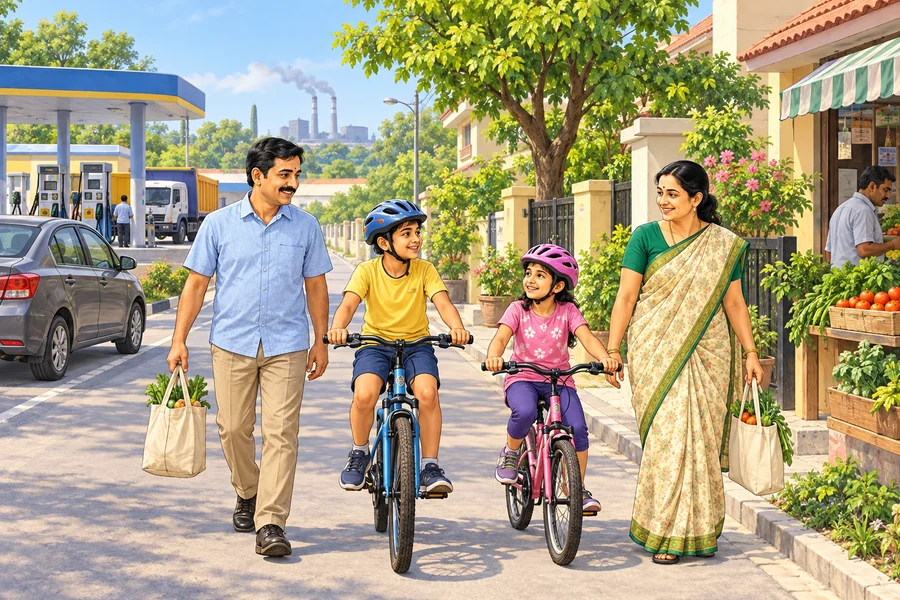
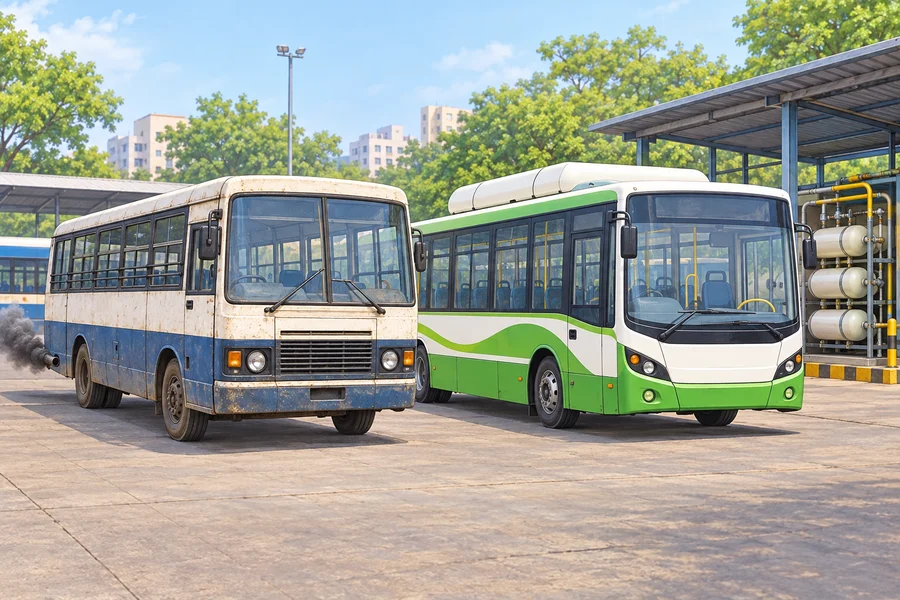
Natural gas is used for cooking and electricity, and coal is used in many power stations. CNG generally causes less local particulate pollution than petrol or diesel, but burning it still releases carbon dioxide. Burning fossil fuels can pollute air; their supplies are finite on a human time scale. Walk or cycle short safe trips, share transport or use a bus where practical. Compare older cooking fuels such as wood, dung cakes and coal with cleaner-burning household gas. Find coal-producing regions on an India map with your teacher.
Natural, human-made, renewable and non-renewable
Textbook pages 223–226
Provided by nature: air, water, sunlight, forests, soil, rocks, minerals and fossil fuels.
People make useful objects from natural materials, such as bulbs, furniture, bicycles and solar panels.
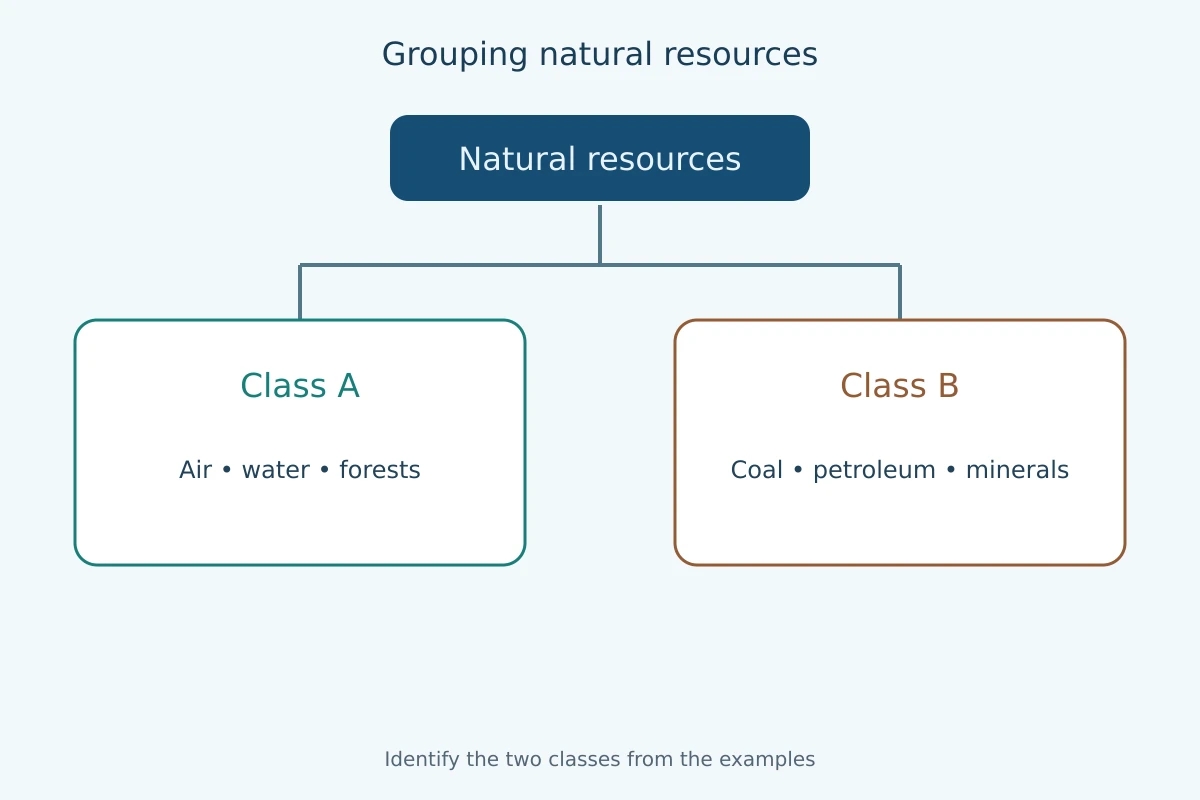
Renewed by natural processes within a reasonable time: sunlight, air, water and forests in the textbook’s examples. Renewal needs careful use and healthy habitats.
Not replenished within a human time scale: coal, petroleum, natural gas, minerals and rocks. The textbook also groups soil here because useful soil forms very slowly.
At home, Bhoomi and Surya notice city smoke and fewer trees. Electric vehicles have no tailpipe smoke, though the electricity that charges them may still have environmental impacts. Keeping vehicles maintained and reducing unnecessary trips helps. Conserving means using what we need without waste, protecting resources for others and the future.
Fill textbook Table 11.4: washing clothes → water; making clay toys → soil/clay and water; collecting firewood → trees/wood; making kites → plant fibres or wood for paper and frame; having breakfast → food from plants or animals, water and energy for cooking. Add your own activities and identify direct and indirect resources.
All 16 textbook questions
Textbook pages 227–229
1. Unscramble and classify the four resources.
ocrk → rock (non-renewable); refost → forest (renewable when protected); ndiw → wind (renewable); atwre → water (renewable through the water cycle, but usable freshwater may be scarce).
2. True or false? Correct the false statements.
(i) True in the textbook’s sense: nature provides the basic resources for human needs. This does not mean every supply is unlimited or equally accessible. (ii) False: machines are human-made. (iii) True: natural gas is non-renewable. (iv) True: air is classified as renewable in this chapter, but clean air can be polluted.
3. Choose the fuels and renewable example.
(i) Most conventional petrol two-wheelers use petrol (b). (ii) Water (b) is the renewable choice among coal, water, natural gas and petrol.
4. Classify coal, natural gas, forests and minerals.
Renewable: forests, if protected and given time to regrow. Non-renewable: coal, natural gas and minerals.
5. Why is petroleum non-renewable?
It takes millions of years to form from ancient remains. We use it much faster than nature can replace it.
6. Why is regrowing a forest difficult?
A forest is more than a collection of planted trees. Mature trees, soil, wildlife, fungi and relationships among them can take many years to recover. Planting saplings is useful, but protecting existing forests is essential.
7. Five daily uses and ways to reduce them.
Drinking water → fill only what you need; bathing → close the tap and use a measured amount; lighting → switch off unused lights; travel → walk, cycle or share a ride when safe; writing on paper → use both sides. These use water, energy, fossil fuels or plant materials directly or indirectly.
8. Four activities possible because air is present.
Breathing, flying a kite, turning a firki or windmill, and sailing a boat with a sail. Burning also needs oxygen, but fire activities require adult supervision.
9. How can you increase local green cover?
With your school or community: choose suitable native trees, obtain permission, plant in the right season, water and protect saplings, and check their survival. Protect mature trees too.
10. What powers the cooker in the picture?
The figure shows a solar cooker using sunlight. Benefit: it needs no cooking fuel and makes no smoke while operating. Drawback: it cooks poorly at night or in heavy cloud and can be slower. Its reflective parts become hot; an adult should handle cooking.
11. Why does large-scale tree cutting harm soil?
Roots no longer hold soil firmly and leaf litter no longer renews it as before. Rain and wind can then carry topsoil away, reducing fertility.
12. Two causes of air pollution and one remedy.
Vehicle exhaust and smoke from burning waste or fuels pollute air. One action is using public transport for suitable journeys; never burn rubbish outdoors.
13. What if there is no sunlight for a week?
Solar panels would produce very little electricity and a solar cooker would work poorly. The gas stove can still cook while gas lasts. The windmill can still pump water if wind blows; its operation does not require direct sunlight at that moment.
14. Complete the resource tree.
Natural resources divide into non-renewable resources and renewable resources. Under non-renewable, place fossil fuels → coal, natural gas, petroleum. Under renewable, place forest, air, water. These seven supplied labels fill the seven empty spaces in the question’s resource tree.
15. Is cutting trees for housing and industry justified?
We need housing and materials, but unrestricted felling harms habitats, soil and water. First reduce waste, reuse materials, protect important forests and assess alternatives. If removal is unavoidable, follow local rules, avoid sensitive habitats, plant suitable species and care for replacements. A report should give the local need, impacts, alternatives and a practical decision.
16. A school water-saving plan.
Measure current use and find leaks; assign adults to repair taps; put reminders near sinks; use buckets for cleaning and water plants efficiently; collect rainwater for suitable uses if the school can maintain the system. Recheck the water meter or bills monthly and share results. This leaves more freshwater available and reduces waste.
Learning further
Textbook pages 229–230
Investigate a local traditional rainwater system with a teacher. Ask elders about visible air pollution and list two realistic school actions without treating interviews as a medical diagnosis. Photograph or sketch rocks and minerals used locally and record their uses without trying to identify a mineral by colour alone. For a school tree-planting drive: obtain permission, choose suitable trees, plan care and make a one-page report naming the planted species and why they matter.
Source: NCERT Curiosity, Grade 6 Science, Chapter 11, printed pages 207–230, 2026–27 reprint. The notes paraphrase each page, retain Activities 11.1–11.6 and guide all Questions 1–16. Images are illustrative assets and are not records of the textbook’s experiments. Write your own observations where the book asks you to investigate.